
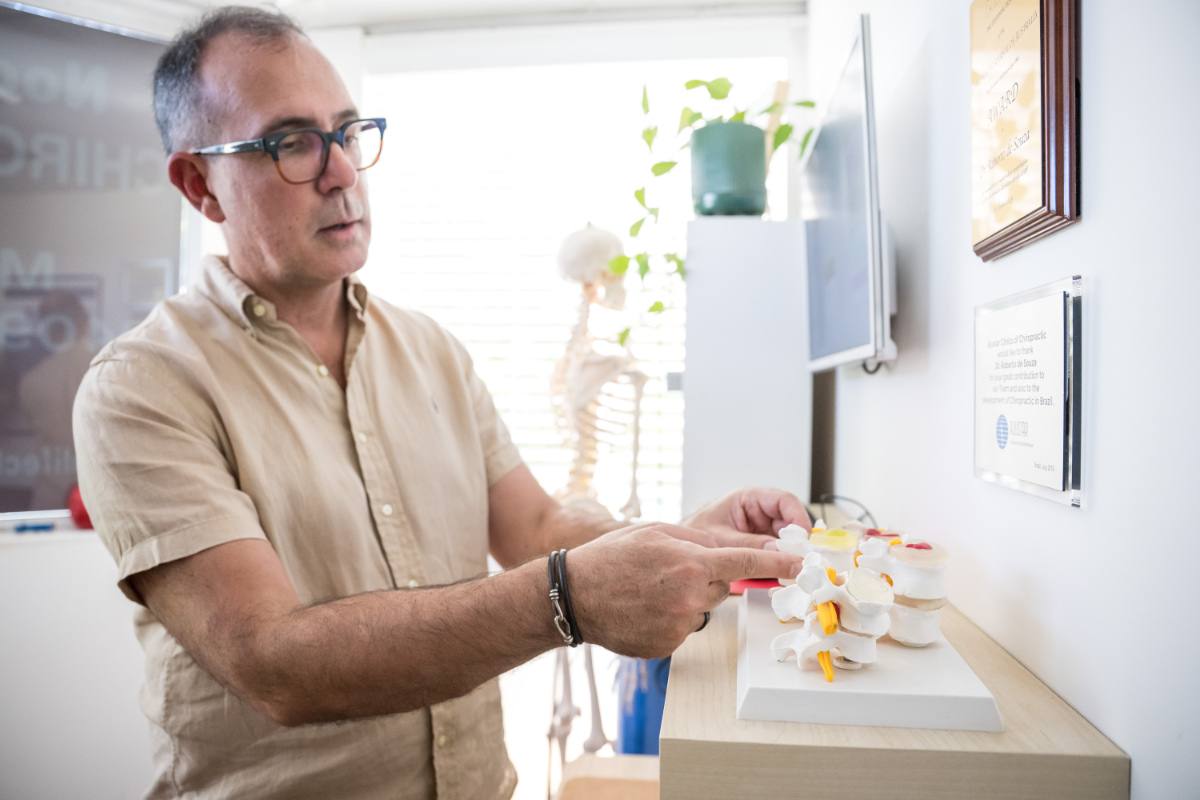
If you are asking yourself, “Should I see a chiropractor,” you have probably already tried a few things. Stretching, pain relief from the chemist, maybe a remedial massage, and the problem keeps coming back. This guide answers the three questions most people actually want answered before they book. Can a chiropractor help your specific problem, is it a sensible fit for your situation, and what really happens at a first visit so there are no surprises?
We see people across Noosa, Tewantin, Noosaville and the wider Sunshine Coast every week at Noosa Life Chiropractic. The honest answer to “should I book” is that it depends on what is wrong, how long it has been going on, and whether your situation is the kind chiropractic care is suited to. One thing we have learned from years in the chair is that most people call wanting one thing, a quick crack to make the pain disappear today, when what actually helps is working out what is causing the problem in the first place. This article is here to help you make that call before you spend the money.
Can a chiropractor actually help my specific problem?
This is the question that matters most, and the honest answer is that it depends entirely on what your problem is. Chiropractic care is best suited to musculoskeletal complaints, which means problems involving the joints, muscles, nerves, and connective tissue of the spine and limbs. Outside that scope, you need a different practitioner, and a good chiropractor will tell you so.
Problems where chiropractic care is commonly a good fit
- Lower back pain, particularly mechanical pain triggered by sitting, lifting, twisting, or poor posture.
- Neck pain and the tension headaches that often come with it.
- Sciatica and referred leg pain caused by spinal nerve irritation.
- Mid-back stiffness, often from desk work or long stretches behind the wheel.
- Shoulder restrictions when the cause is mechanical rather than structural damage.
- Whiplash and post-accident stiffness, once serious injury has been ruled out.
- Hip, knee, ankle, and foot pain where the cause traces back to the spine, pelvis, or the way you walk.
- Recurring pain that eases with massage or stretching, then returns.
Problems where you should see your GP first, not us
Some symptoms need medical assessment before any allied health care, chiropractic included. If any of the following apply, see your GP first.
- Sudden severe back or neck pain after a fall, accident, or heavy impact.
- Loss of bladder or bowel control, or new numbness around the groin or inner thighs. These are red flags.
- Unexplained weight loss, fever, or night pain that wakes you from sleep.
- A history of cancer, osteoporosis, or a recent fracture in the area that hurts.
- Symptoms in a child where the cause is unclear. Paediatric care has specific Board guidance and a GP should be involved.
This is not a hypothetical list. Not long ago, a healthy-looking woman in her middle years came in with spinal pain that was worse in the evenings and was waking her at night. While taking her history, Dr Roberto found she had also been losing weight without meaning to. Those two things together are warning signs that need a medical opinion first, so he declined to adjust her on that visit and asked her to see her GP before any treatment. She was disappointed at the time. She rang the clinic later to say thank you, because her GP found something that genuinely needed medical attention before any chiropractic care could begin. Knowing when not to treat is as much a part of the job as treating.
How we work out whether we can help you, specifically
Dr Roberto De Souza treats every patient the way he would want to be treated himself, and the first visit is built around one question: can we actually help you, and is it safe to try. He often forms an early impression from posture alone, because in chiropractic, we treat posture as a window to the spine. That first read is only a starting point. Nothing is decided until he has taken a full history and completed formal neurological, orthopaedic and chiropractic testing, with imaging added only when it would change the plan. If the picture fits something chiropractic care typically helps, you get a recommendation and an honest estimate of how long it should take to notice a change. If it does not, you will get a referral to the right person instead. We do not treat people we cannot help.
Is chiropractic care safe?
Chiropractic treatment is generally considered safe and well tolerated for most patients, but like any form of healthcare, it may cause adverse reactions in some people. That qualification matters. It is the wording the Chiropractic Board of Australia expects, and it is honest. No healthcare approach, whether physiotherapy, GP-prescribed medication or surgery, is free of risk for everyone.
What “generally well tolerated” actually means
Chiropractic in Australia is a regulated health profession. Every practising chiropractor is registered with the Australian Health Practitioner Regulation Agency (AHPRA), governed by the Chiropractic Board of Australia, and bound by a Code of Conduct that requires safe, evidence-informed practice and proper informed consent. You can look up any registered chiropractor on the AHPRA public register before you book.
For most adults, common reactions after an adjustment are mild and short-lived. A little localised soreness, similar to the day after a new workout, sometimes a brief headache or tiredness. These usually settle within 24 to 48 hours. Serious complications from spinal manipulation have been reported in the literature, but are rare. Careful screening before treatment is how that risk is managed, which is why the first visit is built around assessment rather than adjustment.
How we manage risk at Noosa Life Chiropractic
- Every new patient has a full neurological, orthopaedic, and chiropractic assessment before any adjustment is considered.
- Some people are simply not suited to chiropractic care. When that is the case, we say so and refer on rather than treating, anyway. That single decision is the most important safety control we have.
- Spinal X-rays are referred where they are clinically indicated, so we are working from a clear picture of your spine rather than a guess.
- The technique is chosen for the patient. Dr Roberto works mainly from the seven well-researched techniques he trained in at Palmer College of Chiropractic and selects the one that suits each person and carries the least risk. Gentler, low-force and drop-piece techniques are used where stronger manipulation is not appropriate, including with older patients, pregnant patients, and children.
- Written and verbal informed consent is taken before treatment every time.
Who chiropractic care may not be a fit for
There are situations where spinal manipulation specifically is not appropriate, even if some form of care still might be. These include advanced osteoporosis, a recent spinal fracture, an active inflammatory arthritis flare, certain cancers, vascular conditions affecting the neck, and undiagnosed neurological symptoms. The first visit assessment is how these are identified. It is the reason we do not simply adjust on a walk in.
Will I actually be “cracked,” and what techniques are used?
Not necessarily, and not always on the first visit. Whether and how you are adjusted is decided after the assessment, and the technique is matched to you. Some people get a traditional hands-on adjustment. Others, particularly older patients or anyone for whom high-velocity movement is not suitable, are treated with gentle, low-force methods instead.
It is worth knowing what chiropractic is and is not. Soft tissue release work, the kind that focuses on muscles rather than joints, is something physiotherapists and osteopaths do extremely well. It is genuinely useful, but it is not chiropractic, and you deserve to know which one you are paying for. People occasionally arrive having had mostly soft tissue work elsewhere, wondering why their joints were never actually adjusted. If what you need is soft tissue release, Dr Roberto will refer you to a good physio or osteopath rather than call it something it is not. Being clear about scope is part of being honest with you.

What actually happens at a first visit?
If you decide to book, here is what a first appointment at our Tewantin clinic looks like in practice. This is the short version because there is a full walkthrough on our New Patients page.
Step 1: History and consultation
You fill in an intake form, which you can do online before you arrive to save time, then sit down with Dr Roberto. He will talk through what has brought you in, your medical history, previous injuries, your work and lifestyle, and what you have already tried.
Step 2: Examination
The physical examination covers how your spine actually moves, neurological testing such as reflexes, strength and sensation, orthopaedic tests designed to provoke or rule out particular problems, and a posture evaluation. A hands – on assessment of your spine, seated and lying down, completes the picture.
Step 3: X-ray referral, where clinically indicated
Not every patient is X-rayed. Imaging is requested where it changes the treatment plan and skipped where it clearly will not. When it is needed, it tends to be a full spine view rather than only the sore spot, and there is a good reason for that. Problems are often missed when only the painful area is imaged. A curvature such as scoliosis, for example, can quietly explain why someone keeps slipping back into old patterns, and you will not see it on an X-ray of the neck alone.
Step 4: Report of findings
Once Dr Roberto has reviewed your examination and any imaging, you get a plain English report. What the problem is, what we think we can do about it, roughly how long it should take, and what you can do at home between visits. If we cannot help, that conversation happens here, and you leave with a referral rather than a treatment plan.
How many visits, how long, and what will it cost?
Honestly, it depends, and any practitioner who promises a fixed number before examining you is guessing. It depends on whether the problem is fresh or long-standing, how many injuries your body has accumulated over the years, and how you respond to the first few visits.
Dr Roberto sets expectations early, because most frustration in healthcare comes from expectations that were never spelled out. A useful guide he shares is the rule of three. If something has bothered you for more than three hours it is worth noting; if it has not settled within three days, it is worth looking at, and if it is still there after three weeks, it usually needs a proper plan. So rather than promising an overnight result, he might suggest a three to four-week trial to see how your body actually responds, then review it together.
That review is not a sales pitch. Progress reports at around weeks two, four and six tell you plainly how far you have come and how far there is to go, and you decide whether to continue. Care is pay as you go. There are no prepayment plans and no lock-in packages, just a simple fee per visit based on the time and any extra hands-on work your appointment needs. If you improve faster than expected, the frequency of visits drops, and the total can end up lower than the first estimate.
It helps to think of proper treatment as an investment in keeping your body working well, rather than a cost to be trimmed. The cheapest option is not always the one that gets you the result you actually came in for.
On rebates and funding:
- Private health fund rebates apply on the day through our HICAPS terminal, with most major funds covering chiropractic care.
- A GP Chronic Condition Management Plan (GPCCMP), which replaced the older GP Management Plan and Team Care Arrangements from 1 July 2025, can give eligible patients up to five subsidised allied health visits per calendar year. Those five are shared across all of your allied health providers, not five chiropractic visits on their own, and the plan needs a GP review to stay valid. [CONFIRM WITH CLIENT: current Medicare rebate is around $56 to $62 per session, subject to indexation.]
- Department of Veterans’ Affairs Gold and White Card holders are billed directly with the appropriate GP referral.
- [CONFIRM WITH CLIENT: spinal X-rays referred from the clinic are bulk billed by the nearby radiology provider where eligible, at no cost to you on the day.]
- For a full walk through, see our New Patients page.
A “dream team” approach to your health
One thing that sets the clinic apart is unusual for the profession. Dr Roberto actively encourages patients to build what he calls a dream team. Rather than trying to be everything to everyone, he works alongside GPs, physiotherapists, exercise physiologists, massage therapists, naturopaths, dietitians and psychologists, sharing notes so everyone is working from the same picture. He sees this as patient-centred rather than clinician-centred care, and it is how he manages his own health too.
It is also a good question to ask of any practitioner you are considering, in any field. What training do you have, and do you collaborate with other professionals when that is what gets the patient a better result? If the answer is a genuine yes, you are usually in good hands.
About Dr Roberto De Souza
Credentials matter when someone is going to put their hands on your spine, so it is fair to ask about them. Dr Roberto De Souza trained across an unusually long path. A four-year degree in human biology, then a four-year professional Doctor of Chiropractic at Palmer College of Chiropractic, which is the oldest chiropractic college in the world, followed by a Master’s degree in health education and promotion and a diploma in clinical chiropractic paediatrics. He is currently completing PhD research. In practice, he treats patients right across the age range, from newborns through to people in their nineties, with the technique always matched to the person.
His path into the profession was not the usual one. He was working in international travel, and was partway through medical school when he joined a group of chiropractors providing care to underserved communities overseas. The work, and the way it let practitioners genuinely look after people, convinced him to switch. That patient’s first instinct still runs through how the clinic operates today.
How to decide if booking is the right call for you
As a rule of thumb, a first visit is a reasonable step if your pain is musculoskeletal, it has been going on long enough that it is unlikely to settle on its own, and you have ruled out the red flags above. If you are not sure, call us and ask. The front desk will tell you honestly whether it sounds like something we can help with, or whether you should see your GP first.