
TMJ Treatment in Noosa
Jaw aching, clicking or tight? Find out what’s behind it and what you can do about it, with care personalised to you.
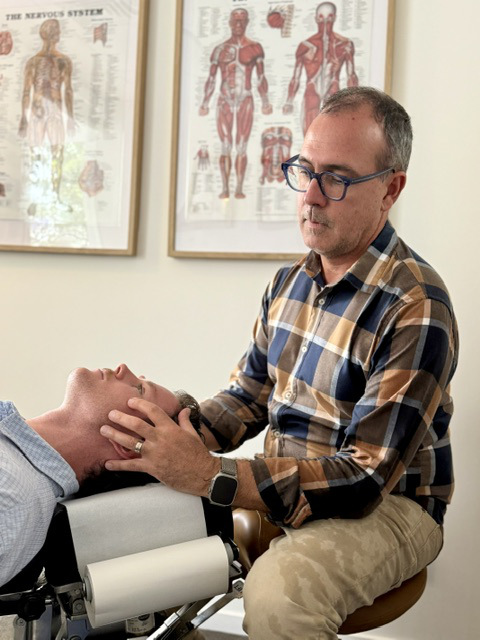
Eating, talking and yawning shouldn’t hurt. When your jaw aches, clicks or tightens up, you want to know why, and whether it’s something that can be helped. That’s where TMJ treatment in Noosa starts at Noosa Life Chiropractic. Dr Roberto De Souza (Chiropractor), who recently completed TMJ training through Palmer College of Chiropractic, listens to what you’re feeling, checks your jaw and neck together, then tells you plainly what he found, what he suggests and why.
How we approach TMJ treatment in Noosa at Noosa Life
Not every click, headache or sore face is a jaw joint problem, and many jaw problems settle with time and simple self-care.
So your first visit is an assessment, not an assumption. If conservative care here looks right for you, we explain what we’d do and why. If something else is going on, we tell you and point you to the right person, whether that’s your dentist, your GP or someone else.
The care is conservative and reversible. None of it is designed to change your teeth, your bite or the structure of the joint.
TMJ or TMD, and what is a temporomandibular disorder?
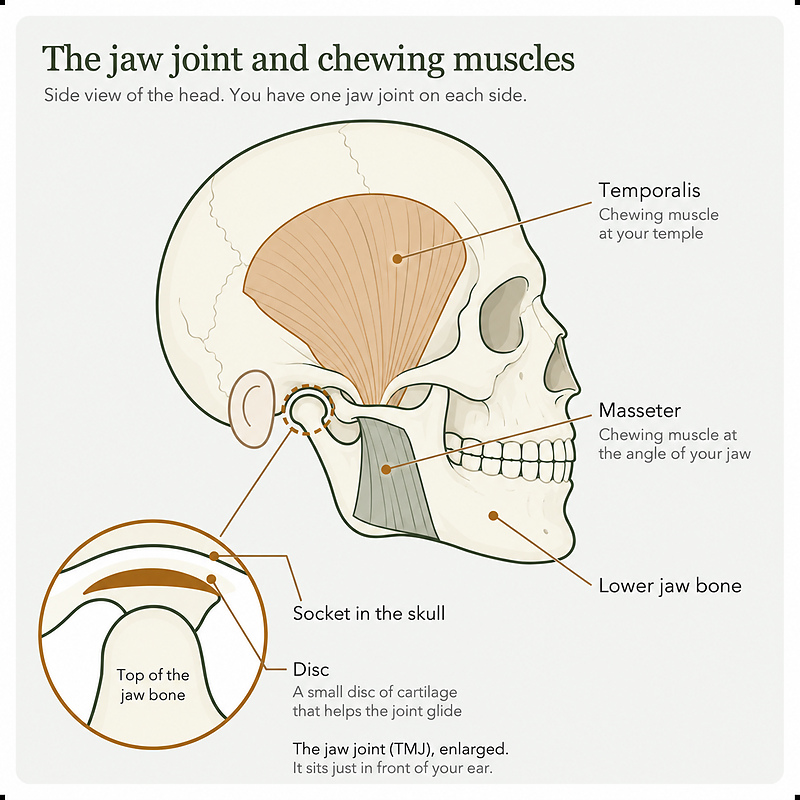
TMJ is the name of the jaw joint. You have one in front of each ear, where your lower jaw meets your skull, and the two work as a pair every time you chew, talk or yawn. A small disc of cartilage sits inside each joint and helps it glide.
TMD is short for temporomandibular disorders. It is the name for a group of problems that cause pain or trouble moving the jaw joint and the muscles around it. People often say “I’ve got TMJ” when they mean TMD, and that is fine. We know what you mean. You may also see it written as TMJ disorder, TMJ dysfunction, temporomandibular dysfunction or TMJD. They all describe the same group of problems.
TMD usually falls into one of three groups.
- Muscle related. Pain and tenderness in the muscles you chew with. The main ones are the masseter, at the angle of your jaw, and the temporalis, at your temple.
- Joint related. Pain in the joint itself, or a disc that catches or clicks as the joint moves.
- Headache linked to TMD. A headache, usually around the temples, that comes with a jaw problem.
Some people have a mix. Working out which one you have is part of the assessment, because it changes what is worth trying.
Jaw pain, clicking and tightness we assess
The signs and symptoms vary from person to person, and people describe TMJ symptoms in their own way. These are the ones patients describe to us.
- Jaw pain when chewing, or when opening your mouth wide to yawn or bite
- Jaw clicking or popping that hurts
- A jaw that sometimes feels like it gets stuck, or limited movement, where it will not open as far as it used to
- Jaw tension, a jaw that gets tired when you are eating, or waking up with a sore jaw
- Facial pain or muscle tension around the cheeks
- Tenderness in the cheek or temple muscles
- Clenching your teeth when you are stressed, or thinking you grind your teeth at night
- A headache around the temples that is worse with chewing
- Neck stiffness that turns up alongside the jaw pain
A list like this can’t tell you what’s wrong. That’s what the assessment is for.
Jaw pain when chewing or opening your mouth
Jaw pain when chewing or opening your mouth can come from the jaw muscles, the jaw joint or the teeth. Working out which is the first step, and it is what the assessment is for. If you also have toothache or swelling, see your dentist first.
Jaw clicking and popping
Jaw clicking or popping without pain is common, is considered normal and does not need treatment. If the click hurts, or your jaw catches or will not open fully, it is worth having it looked at.
What can contribute to jaw pain
There is rarely one neat cause. Researchers think several things play a part in whether jaw pain starts and whether it lingers.
- Jaw clenching and teeth grinding. Teeth clenching, grinding (bruxism) and jaw pain are often found together. Tooth wear from grinding is one for your dentist.
- Stress and poor sleep. Both tend to go with a tight jaw.
- An injury. A knock to the jaw or face, or a whiplash injury.
- Habits that load the jaw. Chewing gum and biting nails.
- How sensitive your pain system has become. Pain is not only about the joint. Stress and how sensitive a person’s pain system has become can play a part, which is why your plan may include advice and exercises as well as hands-on care.
Knowing what applies to you helps us work out what to try, and what you can change yourself.
TMJ and neck pain, and why we assess both
Many people with a sore jaw also have a sore neck or headaches. Here is what the research can and cannot tell us.
Your neck. Jaw pain and neck pain often turn up together. Studies comparing adults with and without TMD have found more neck-related difficulty and less neck movement in those with TMD. That does not tell us which came first, which is why we assess your neck as well as your jaw.
Posture. You may have read that posture causes jaw problems. The research on that is unclear, and studies have not found a consistent difference in head and neck posture between people with and without TMD. Posture-based exercise is still one of the approaches recommended for long-standing jaw pain, so it may be part of your plan.
Sleep. We ask about your sleep because sleep problems and jaw pain often occur together. If you snore heavily, have been told you stop breathing in your sleep, or wake unrefreshed, that is one for your GP, and we will tell you so. We do not treat snoring, sleep apnoea or breathing problems.
Headaches linked to the jaw (TMJ headaches)
Some headaches are linked to the jaw. The international headache classification recognises a headache that comes from a temporomandibular disorder. It is usually felt around the temples and is often worse with chewing or clenching. Most headaches have other causes, so we assess before we assume. There is more on headaches and neck pain on our common conditions page.
Do you need a dentist, a chiropractor or both?
The honest answer is that it depends on what you are feeling.
See your dentist first if you have toothache, swelling, a broken or loose tooth, or your bite has suddenly changed. Splints and night guards are fitted by dentists too. If you grind your teeth at night or are worried about tooth wear, your dentist is the right person to see, and we are happy to work alongside them.
See your GP first if you have ear pain. The jaw joint sits just in front of the ear, so jaw pain can be felt there, but ear pain has other causes that need ruling out.
You do not need a referral to book with us. Pain in the jaw or face does not always come from the jaw joint, and teeth are a common cause. If we assess you and think a dental cause needs ruling out, we will tell you and send you to your dentist.
We will send you to your dentist, your GP or the emergency department, not book you in, if you have a recent injury to your face or jaw, a jaw that is stuck open or shut, numbness or weakness in your face, ringing in your ears or dizziness that has not been checked, or signs of a sleep breathing problem.
What happens at your first visit for jaw pain
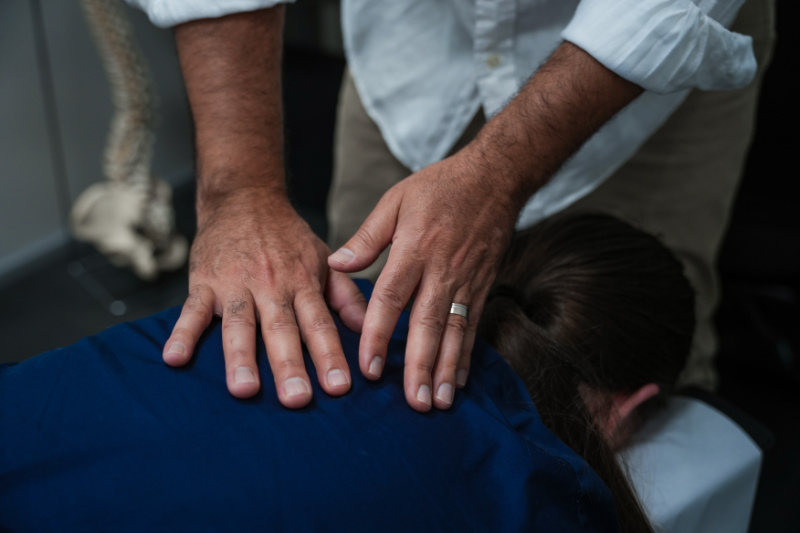
Your first visit is a chiropractic consultation and assessment, and takes about 45 minutes. It starts with a conversation. We ask what you are feeling and how long it has been there, what makes it better or worse, your dental and medical history, whether you clench or grind, how you sleep, what you have already tried, and whether there has been an injury. You can fill in our online forms beforehand.
Then we look at how things move. Depending on what you have told us, that may include
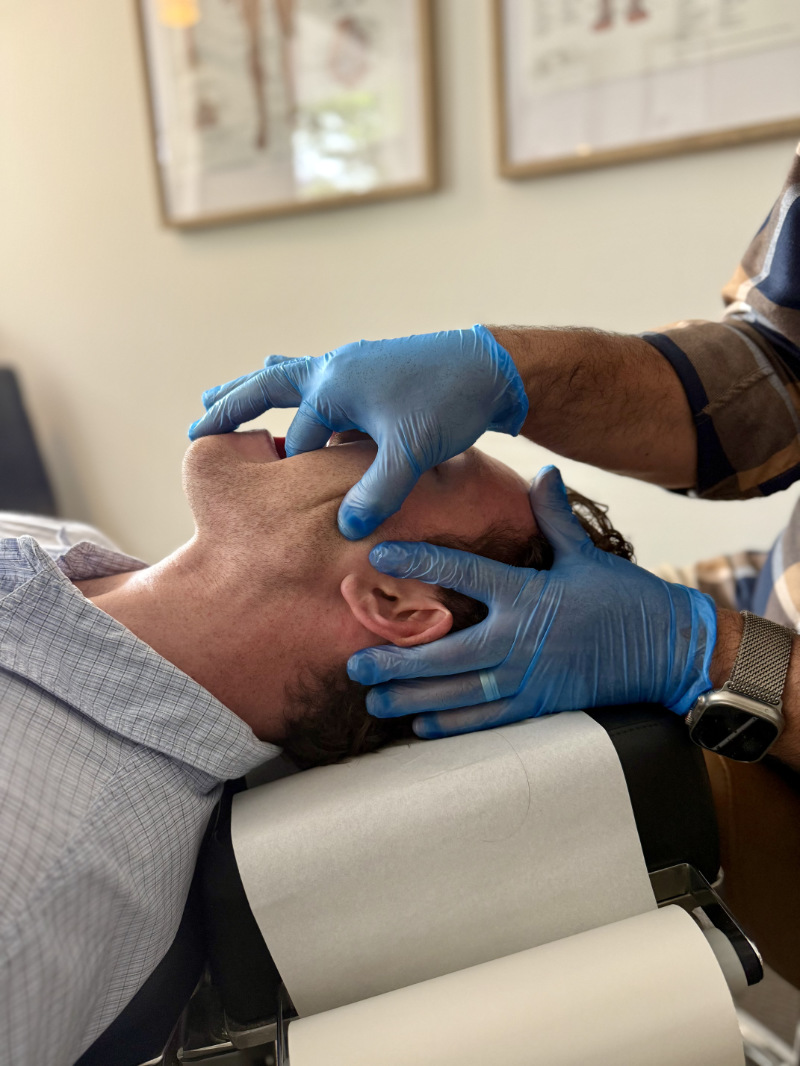
- how far and how comfortably your jaw opens, and the path it takes
- any clicking or catching in the joint
- tenderness and tightness in the jaw and temple muscles
- how your neck moves
- movements that bring your symptoms on, or ease them
- checks for anything that suggests you need a dentist, a GP or someone else
We then explain what we found and whether care here looks reasonable.
Treatment may also happen at that first visit, once the assessment is done, conservative care looks appropriate and you have given your consent. Not everyone is treated at the first appointment.
Jaw pain treatment at Noosa Life, what care may include
There is no single treatment that suits every jaw, and there are several treatment options. Your treatment plan depends on what we find in the jaw joint and the surrounding muscles, your jaw function, and what you would prefer. Your care may include some of the following. Not everyone needs all of them, and some people need none.
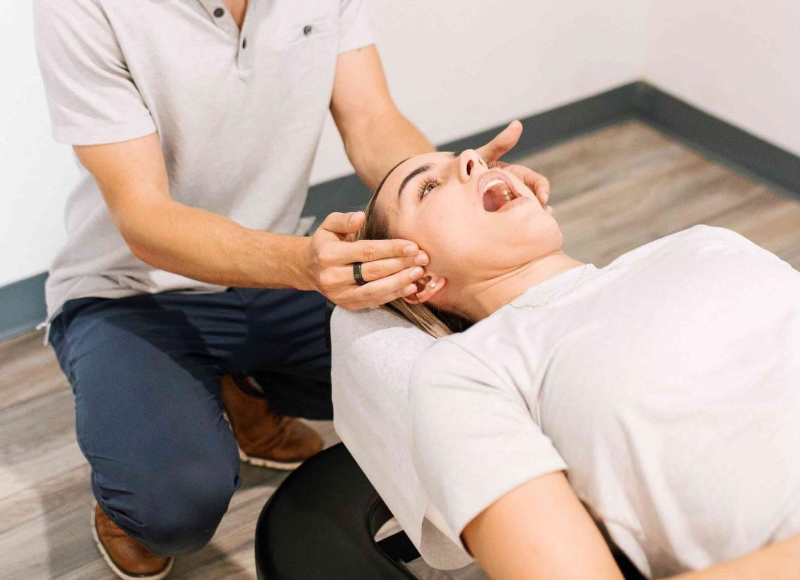
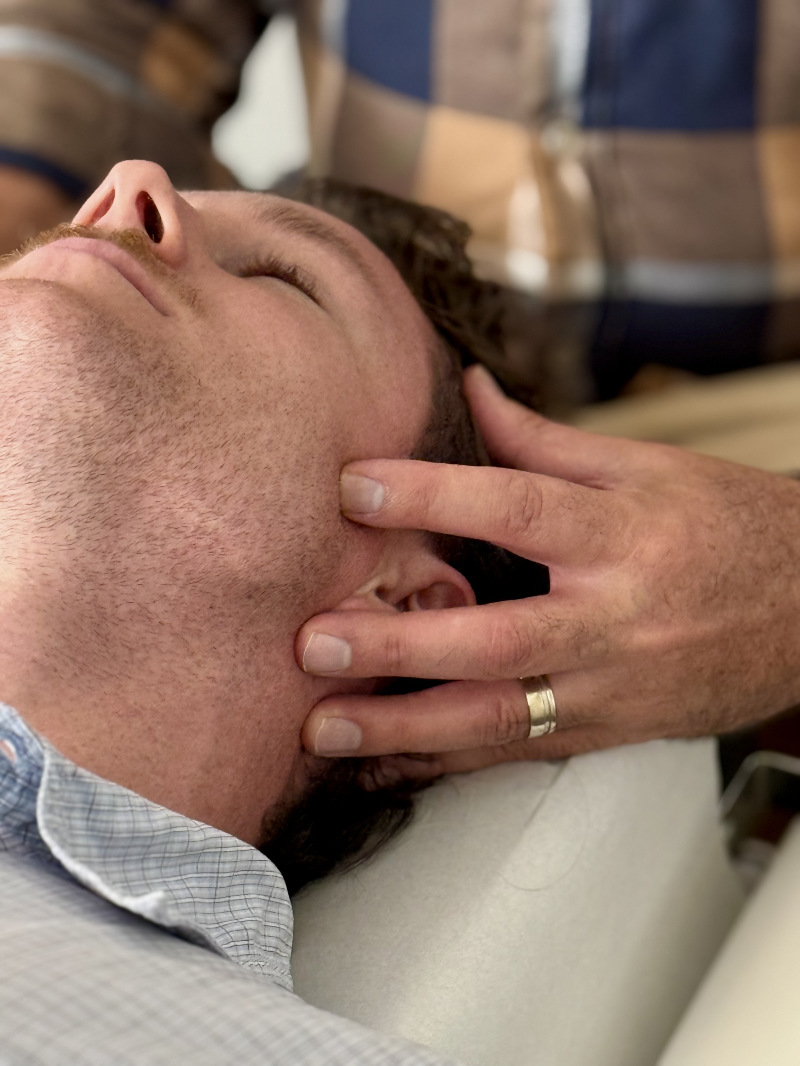
- Jaw joint mobilisation. Gentle hands-on mobilisation of the jaw joint. This is a slow, controlled movement of the joint, done by hand.
- Trigger point and soft tissue therapy. Hands-on work on the muscles you chew with, and on neck and shoulder muscles where they are involved.
- Chiropractic care for your neck. Where your neck is involved, chiropractic mobilisation or adjustment of the neck, as part of your chiropractic care.
- Jaw exercises and rehabilitation. Exercises and stretches to do at home, and we check you are doing them comfortably.
- Dry needling for jaw muscles. Dry needling of the jaw and neck muscles is something we may talk through with you for muscle-related jaw pain. Reviews of the research have found little reliable evidence that it reduces jaw and face pain. It is always your choice.
- Advice on habits and sleep. Practical advice on habits that load the jaw, such as daytime clenching, gum chewing and nail biting, and general advice on sleep habits, eating comfortably while your jaw settles, and day-to-day lifestyle.
We explain what we are proposing and ask for your consent before anything happens. No treatment is risk free, and people respond differently. Some people may experience temporary soreness, stiffness or tenderness following manual treatment or mobilisation. These effects are usually mild and short-lived. Treatment is modified or avoided where the assessment identifies a reason it may not be appropriate.
Dry needling can sometimes cause temporary muscle soreness, tenderness, minor bruising or a small amount of bleeding at the needle site. Some people may also feel temporarily light-headed. The potential risks and suitability of dry needling are discussed before treatment.
We go through the risks and your other options, including doing nothing, before we start.
What you can do between visits
What you do day to day often matters as much as what happens in the clinic. Your advice will depend on your assessment, but these are the simple things commonly suggested for a sore jaw.
TMJ exercises and jaw habits
- Choose softer foods for a while, and take smaller bites
- Avoid opening very wide, including big yawns where you can manage it
- Give the gum and the nail biting a rest
- Notice when you are clenching through the day, and let your jaw drop slack
- Try heat or cold on the sore muscles, whichever feels better
- Do the TMJ exercises you have been given, little and often
If your jaw is getting worse, or something new turns up, tell us or see your GP or dentist.
How we measure progress
We do not assume a treatment is helping just because we recommended it. Where it is appropriate for your problem, we track things that matter to you, such as
- your pain or tenderness, scored out of 10
- how far and how comfortably your jaw opens, which is your range of motion
- whether you can chew, yawn and talk without thinking about it
- how tender the muscles are
- how your neck is moving
If you are not improving as expected, we change the plan, stop a treatment, or refer you on. We will tell you honestly either way.
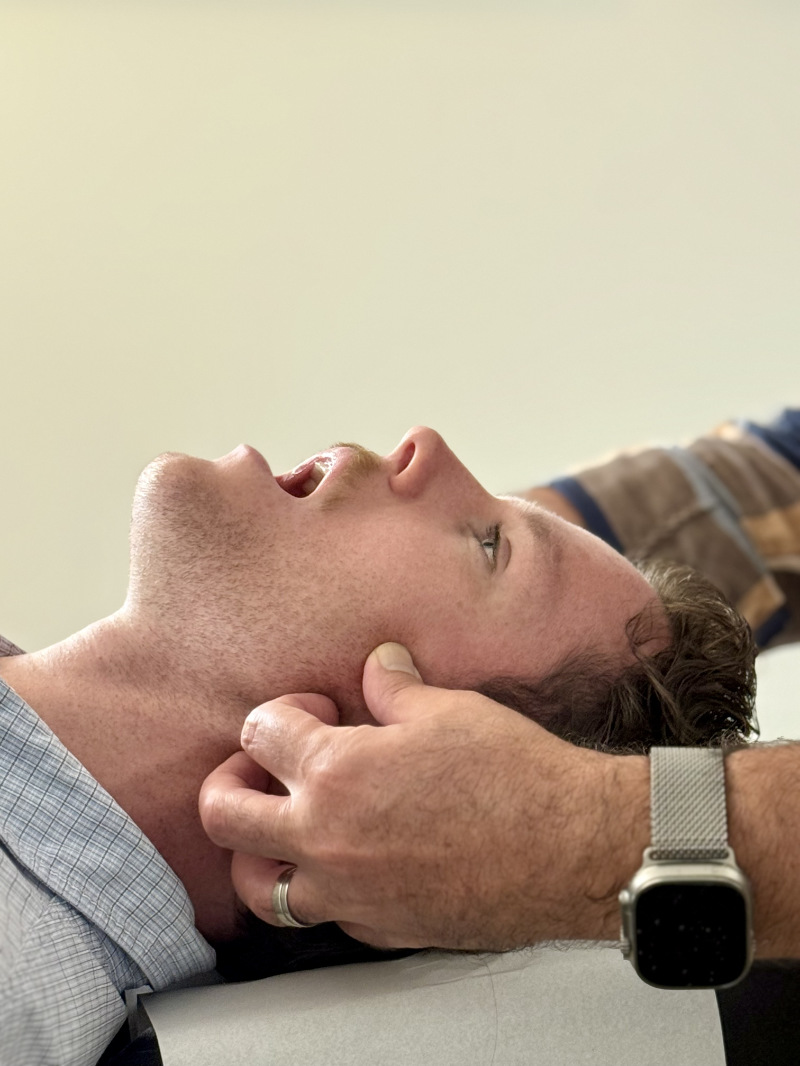

What the research says about TMJ care
It is a fair question, and the answer has two parts.
For newer jaw problems, many are temporary and settle with time and simple self-care.
For persistent jaw pain, meaning pain that has lasted three months or more, a 2023 clinical practice guideline published in The BMJ recommends hands-on jaw mobilisation, trigger point therapy, supervised jaw exercises and stretching, and posture-based exercise, along with education and self-care. It also recommends cognitive behavioural therapy, which we do not provide. In the research behind it, these approaches helped more people than a placebo or sham treatment did. They did not help everyone, and the research is about the techniques, whoever provides them.
That’s why we track your progress as we go.
Source. Busse JW and colleagues. Management of chronic pain associated with temporomandibular disorders, a clinical practice guideline. BMJ 2023;383:e076227.
Meet Dr Roberto De Souza (Chiropractor)
It is fair to ask who is treating you, and what training they have.
Dr Roberto De Souza (Chiropractor) is registered with the Chiropractic Board of Australia and graduated from Palmer College of Chiropractic in the United States. He has a particular interest in jaw pain and TMD.
In September 2026 he completed the basic module of Chiropractic Management of the TMJ, a 22-hour course through Palmer College of Chiropractic.
You can read more about Roberto and the team on our meet the team page.
Fees, health funds and Medicare
Dry needling, where it is used, is part of the consultation and is not charged separately.
Private health funds. A jaw assessment is a chiropractic consultation. If you have extras cover for chiropractic, you may be able to claim part of the fee, depending on your fund and your level of cover. We cannot tell you what your policy will pay, so please check with your fund.
Referrals and Medicare. You do not need a referral to book. You only need a GP referral if you want to claim under Medicare through a GP chronic condition management plan. Medicare has its own conditions, including that your GP decides whether you are eligible and that the consultation runs for at least 20 minutes, so ask us when you book.
No packages and no lock-in. How many visits you need depends on what we find and how you respond.

Jaw consultation fees
| Visit | Length | Fee |
|---|---|---|
| Initial consultation | About 45 minutes | $110 |
| Follow-up consultation | About 15 to 30 minutes | $75 |
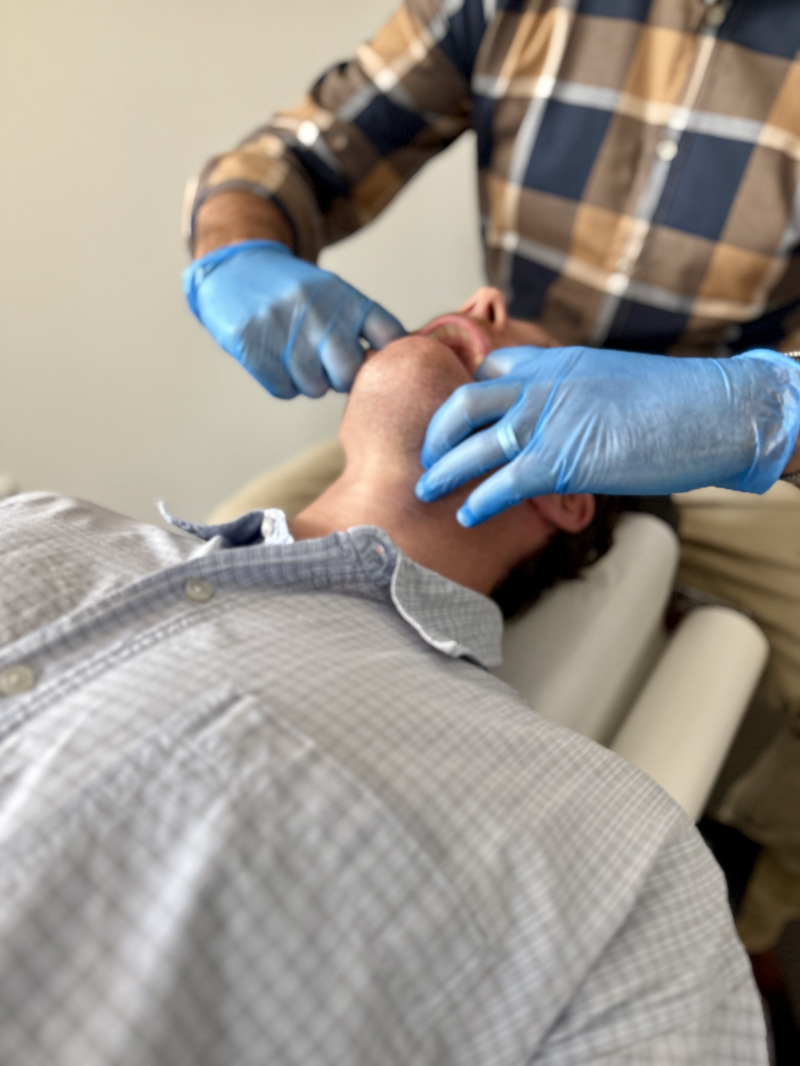
Book a jaw pain assessment in Tewantin, near Noosa
For TMJ treatment in Noosa, book a jaw assessment with Dr Roberto De Souza (Chiropractor) at Noosa Life Chiropractic in Tewantin, close to Noosaville and Noosa Heads. You’ll leave knowing what’s likely behind your jaw pain and what we suggest, whether that’s care here, care alongside your dentist or GP, or a referral.
Noosa Life Chiropractic
The Atrium, 24/91 Poinciana Ave, Tewantin QLD 4565
Phone 0409 570 246
Contact us
Noosa Life Chiropractic is rated 4.9 on Google across all our services.
Opening hours
| Day | Hours |
|---|---|
| Monday | 8:00am to 12:00pm, 2:00pm to 6:00pm |
| Tuesday | 8:00am to 12:00pm, 1:00pm to 5:00pm |
| Wednesday | 8:00am to 12:00pm, 2:00pm to 6:00pm |
| Thursday | 8:00am to 12:00pm, 1:00pm to 5:00pm |
| Friday | 8:00am to 12:00pm, 2:00pm to 6:00pm |
| Saturday | 7:00am to 12:00pm |
| Sunday | Closed |
| Public holidays | Closed |